Thursday, October 25, 2012

Michael Jackson: Nearly back in the black.


The Estate attorneys are on the ball. Great work in getting the exuberant interest rates lowered on these high debts on the catalogs so they can pay them off quicker. Plus the lucrative projects showing Michael's earning power still thrives. ~ Qbee


Michael Jackson's Personal Debts To Be Paid Off By Year's End
 
When Michael Jackson passed away in June 2009, his departure was met by the grieving of millions of fans around the world—and by a great deal of discussion and speculation over the fate of the half-billion dollars he owed to creditors ranging from big banks to “Thriller” director John Landis.
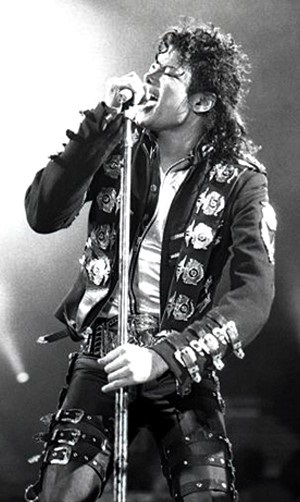

Michael Jackson: Nearly back in the black.
Many questions have been answered over the past three years as the King of Pop’s estate has continued to pull in nine figures on an annual basis, most recently $145 million over the past year. And according to representatives from the estate, the late singer’s personal debts will be paid off by the end of the year.

The last major non-business loan left is connected to Jackson’s Mijac Music, the entity that contains the copyrights to the songs he wrote over the course of his career. Shortly after the singer’s death, the estate started paying off a $75 million loan he had taken out against the catalog, negotiating the interest rate down from an exorbitant 15.5% to a very manageable 4%. The final payments on are set to be made this fall.


It’s a major milestone for Michael Jackson’s growing postmortem business empire, especially considering where the estate began. After the singer’s death, it appeared that many of his assets were close to default, if not already there. But a handful of deals—including a $60 million advance for the concert film This Is It and a $250 million record deal with Sony, the largest in history—gave the estate the steady cash flow needed to pay off creditors.

In addition to paying down the massive loan on Mijac Music, the estate has paid $35 million owed to concert promoter AEG (in connection with Jackson’s planned This Is It tour) and the $4.1 million mortgage on the Jackson family estate in Encino, Calif. Smaller debts to individuals have been renegotiated and resolved, including an agreement with Landis, who had alleged that Jackson still owed him $2.3 million in 2009.

A substantial business loan ($280 million, by FORBES’ estimate) remains on Jackson’s 50% stake in the Sony/ATV publishing catalog. The singer shrewdly bought the entity’s precursor, ATV, for $47.5 million in 1985 after recognizing the value of the rights to songs it contained by The Beatles. Ten years later he merged the catalog with Sony’s publishing catalog after the company paid him $100 million as part of the deal, retaining half of the newly-formed combined entity for himself.

Today, the Sony/ATV catalog itself is worth somewhere in the neighborhood of $2 billion, thanks to its ownership of copyrights by The Beatles, Bob Dylan, Taylor Swift, Lady Gaga and others. The interest rate on Jackson’s loan connected to the catalog has been sliced from 5.8% to 2.9% since his death. At that low rate, paying back the loan quickly, in full, may not even be financially expedient—the company’s funds could be better utilized by buying up new, money-generating copyrights. That said, given Jackson’s postmortem earnings prowess, the estate could probably pay off that loan fairly soon if necessary.

The singer’s Immortal World Tour, a joint venture with Cirque Du Soleil, has grossed $160 million this year, making Michael Jackson the top-grossing live act in North America three years after his death. Other deals–including one with Pepsi, Jackson’s first endorsement pact in two decades–should continue to add to the estate’s coffers. Not even John Landis could have imagined such a resurrection.

For more on the business behind the King of Pop, sign up for news on my upcoming book, Michael Jackson, Inc (Simon & Schuster, 2014). You can also follow me on Twitter and Facebook.

By: Zack O'Malley Greenburg

Friday, October 19, 2012

Michael Jackson Bad25 Documentary Trailer

This  60-second trailer previews the documentary film by award-winning director Spike Lee, celebrates the 25th anniversary of Michael Jackson's landmark "BAD" album and tour.

Spike Lee's BAD25 Documentary to air on ABC Thanksgiving Day
Thursday, November 22 9:30-11:00 p.m. EST on ABC


Thursday, October 11, 2012

Michael Jackson Doc 'BAD25' Coming to Movie Theaters in New York and Los Angeles


Wow this is very exciting news. I wont be able to attend but Its great Promo for BAD25  exciting for MJ fans and Im not sure but  think it may make the Documentary eligible for and Oscar nomination. ~ Qbee

Michael Jackson Doc 'BAD25'
Coming to Movie Theaters in New York and Los Angeles

The Spike Lee-directed film, which recently debuted at the Venice and Toronto film festivals, will see exclusive one-week engagements on the coasts beginning Oct. 19.


The Spike Lee-directed documentary BAD25, which chronicles the making of Michael Jackson's 1987 hit album and recently debuted at the Venice and Toronto film festivals, will see a limited theatrical run beginning Oct. 19. That's when fans in Los Angeles and New York will be able to screen the doc in exclusive one-week engagements (see locations and dates below).


The doc is one of several projects timed to the 25th anniversary of Bad. They include a deluxe package of remastered music along with a second disc of 13 rare and previously unreleased bonus tracks, as well as the first ever DVD and live CD from the Bad world tour (shot and recorded on July 16, 1988 at Wembley stadium).

Said John Branca and John McClain, co-executors of The Estate of Michael Jackson, in a statement: “Spike was the only choice for us when we decided to open up the archives and make this documentary. He has done a masterful job taking the audience behind the scenes and revealing how this ‘coming of age’ project was created.”


 See BAD25 screening information below:
New York: Oct. 19 to 26 at AMC Loews Theater; 66 Third Ave.
Los Angeles:  Oct. 26 to Nov. 2 at Chinese 6 Theaters; 6801 Hollywood Blvd.


After the theater run, BAD25 will air on ABC on Thanksgiving night (Nov. 22).


 Source  http://www.hollywoodreporter.com/news/michael-jackson-doc-bad25-coming-378174

Saturday, September 15, 2012

Spike Lee calls media treatment of MJ 'shameful'

TORONTO -- Spike Lee's new documentary "Bad 25" captures Michael Jackson in the turbulent time before he crafted 1987's "Bad," a period when the notoriously meticulous King of Pop worked with feverish obsession on trying to top his own megahit "Thriller" while the tabloids vigorously devoured the remnants of his personal life.


But even after "Bad" made good and topped charts around the world, the album's release saw the decided shift of attention from Jackson's pristine pop to his apparently bizarre personal behaviour (Chimps! Amusement parks! The Elephant Man's bones!).

And for that media-fuelled rubbernecking, Lee says there's plenty of shame to go around.

"People, they had the hater-ade. They were drinking hater-ade," the two-time Academy Award nominee said in an interview from a swanky hotel suite Saturday during the Toronto International Film Festival, where the movie screened.

"Read the reviews of the 'Bad' album. They wrote like this was some piece of (crap). And (they) don't call him by his name -- 'Wacko Jacko?' It's shameful.... Those people should be ashamed what they did to him."

And while Lee's reverential film remains studiously focused on Jackson's work, it also reveals much about an intensely private man who really never experienced privacy.

"Bad 25" picks up in the wake of the titanic success of Jackson's second album as an adult solo artist, 1982's game-changing stunner "Thriller." The best-selling album of all time, "Thriller"'s sales numbers are still too gaudy to believe -- after all, it's been certified platinum 29 times over in the U.S. alone while going twice diamond in Canada.

But Jackson wasn't satisfied with that. Just as he was determined to make "Thriller" a much bigger success than his 1979 disco-informed classic "Off the Wall," Jackson thought he could similarly top the biggest hit of all time. As Lee's film uncovers, Jackson even used to scrawl "100,000,000" on mirrors and notebooks as a reminder to himself of the impossibly lofty sales number he wanted to achieve with "Bad."

Of course, that produced an almost unprecedented amount of self-imposed pressure for a pop artist.

So Lee's film captures Jackson obsessing over not just the 11 tracks that formed "Bad" but also its ambitious music videos (one of which was directed by film luminary Martin Scorsese), the choreography of the album's eventual epic tour (which included a show in front of 72,000 fans at London's Wembley Stadium) or even bits of promotional minutiae only tangentially related to Jackson's music.

(As an example, one of the film's lighter moments arrives in the form of self-shot archival footage of Jackson acting out specific instructions for the animators of a California Raisin commercial that was to feature his image).

Lee says Jackson believed that he couldn't stop pushing himself or everything he had worked to build would deteriorate.

"He was not stupid," said Lee, clad in a glittering Michael Jackson T-shirt with matching custom Nike kicks.

"He saw people, black artists, who were at the top and then broke. He saw many great black artists who were confined to just being black artists.

"Michael's about breaking boundaries."

Still, Lee can't necessarily relate to Jackson's unyielding eye for detail.

"There's nothing wrong with being a perfectionist. Now, me, I'm not going to do 80 takes like David Fincher of somebody picking up a magazine. I'm not going to do that!" he adds, laughing as he picks up and slams a nearby lifestyle mag for emphasis.

"But it was his money.... He put his money into his work."

And Lee does identify with Jackson in other ways.

The legendary filmmaker behind "Do the Right Thing" and "Malcolm X" was born in 1957, a year before Jackson.

He vividly recalls seeing Jackson as the overwhelmingly gifted young phenom headlining the Jackson 5 when they first shimmied across the stage at "The Ed Sullivan Show." Years later, Lee was a film-school student left so enthralled by the videos for "Thriller," "Billie Jean" and, yes, "Bad," that he aspired to helm such clips himself.

So when Jackson died in summer 2009 after a cardiac arrest (his doctor, Conrad Murray, was later convicted of involuntary manslaughter), Lee was devastated.

"I was messed up for months about that," said the 55-year-old. "I grew up with Michael. I'm a year older than him. When I was 10, he was nine. So I didn't know him, but I saw him grow up."

Along with Lee's film, the 25th anniversary of "Bad" is being celebrated with a spiffy new deluxe re-release on Tuesday.

The new two-disc set includes a remastered version of the original album, plus a slate of worthy B-sides that were once axed from its concise tracklist. (With characteristic honesty, Lee dismisses a portion of the second disc's new material, screwing his face into a frown as he warns: "Forget about the remixes.")

Lee doesn't think there's room for debate over how the record -- which featured such hits as the title track, "Man in the Mirror," "The Way You Make Me Feel" and "Smooth Criminal" -- wears its age.

"Look at the Billboard charts when 'Bad' was released 25 years ago, and then listen to those songs, and see if they still sound contemporary or dated," said Lee, whose film will air on ABC on Nov. 22 in Canada.

"'Bad' still stands up. Those other songs that were on the Top 10 list 25 years ago? Who were they? Thin Lizzy? Are we still speaking about those people?" he asks incredulously. (In actual fact, Billboard's Top 10 the first week "Bad" topped the charts included Whitney Houston's sophomore album alongside the "La Bamba" soundtrack and records by Whitesnake, Def Leppard and Heart.)

"The greats will stand the test of time. It's not even an argument."

Although Lee has condemned those who eagerly gawked at Jackson's downfall (the film doesn't cover the accusations of child sexual abuse brought against the singer in 1993), he does admit to some level of curiosity about one specific element of Jackson's life: his gradually lightening skin tone.

While it was later reported that Jackson's colour was changing due to the skin condition vitiligo and treatments for lupus, Lee watched the transition with some interest.

"Black folks were wondering about (that) -- I'm not going to lie," Lee said with a chuckle, pinching his own skin. "Because Michael never came public that he had this disease. I was one of them. Like, 'Wait a minute man. What's up brother?'

"I'm not going to lie. That's full disclosure. And I'm not speaking on behalf of 45 million African Americans, but there were discussions about Michael's complexion."

Of course, there were discussions about virtually every element of Jackson's life.

Lee had access to a deep well of sensational archival footage, supplementing original interviews conducted with Jackson collaborators including Scorsese and director Joe Pytka (as well as such admirers as Kanye West, Mariah Carey and Canada's Justin Bieber) with clips of Jackson in the studio or warming up on video sets.

But amid all the shots of Jackson fervently fretting over some seemingly insignificant tone or lyric, there are revealing insights about the strange way he lived his life.

This is a man who adopted devious disguises just to meet up with his brothers for dinner, whose every public appearance devolved into hysteria and whose earliest memories of childhood were indivisible from showbiz.

"He had to sing and dance to eat since he was six years old," Lee said simply.

At one point in the film, a teary-eyed confidante of Jackson's relates a conversation they shared in which the singer yearned to be a fly on the wall at a party, to see what normal people talked about.

And one of the bonus tracks on "Bad 25" is the knotted, claustrophobic "Price of Fame," in which Jackson laments the cost of dealing with the demands of a massive audience that's blindly obsessed with him.

Lee doesn't think long when asked what that cost was.

"Look, he's not here. He's not here. Not in this physical form," he replies.

"You get to be the most recognizable person on this planet, there's a price for that.... You could say he paid with his life, really."


Source: http://www.cp24.com/entertainment/spike-lee-calls-media-treatment-of-mj-shameful-1.957363#ixzz26a4ouKON

Wednesday, September 12, 2012

Abortion, Fame, and 'Bad': Listening to Michael Jackson's Unreleased Demos

 
Author Joseph Vogel and Matt forger, a recording engineer and longtime Jackson friend give us a track-by-track review of the demos and unreleased songs from the soon to be released Bad 25 Album. Ive heard some snippets of the songs and they sound great. Anticipation is building and I can hardly  I'm getting more excited and cant wait till I recieve my Deluxe  3CD and DVD Package.~ Qbee


 Abortion, Fame, and 'Bad':
Listening to Michael Jackson's Unreleased Demos

by Joseph Vogel Sep 11, 2012


The stories behind the tracks that will finally see the light of day for the album's 25th-anniversary rerelease


In late 1986, Michael Jackson was pacing in Westlake Audio's Studio D, singing to himself: "I feel so bad, I feel really bad, God music makes me feel good."

"At the time, we had no idea the name of the album was going to be called Bad," jokes assistant engineer, Russ Ragsdale.

It wasn't the only revelation for the crew at Westlake. It turned out in the interval between Thriller and the official start of the Bad sessions, Jackson had written some 60-70 new songs. Eleven ended up on the official album, leaving numerous great tracks on the cutting room floor in various stages.

Over the past couple of years, under the direction of Jackson's estate, a team has been carefully archiving and digitizing these demos. "Some tracks we found were very early recordings," says Jackson estate co-executor John Branca. "Some were actually so complete that any other artist but Michael Jackson might consider them finished tracks. Still others were in between." Of these, six demos were chosen for Disc 2 of the forthcoming Bad 25 box set (out September 18).

Recently I was given an exclusive listen to these never-before-heard demos. I was struck by how finished and enjoyable they are. These are not mere song fragments. While the production on a couple of them sounds a bit dated, all have great hooks and choruses. What makes them really special, though, is their authenticity. None have been given a modern makeover. What they offer is a more intimate picture of Jackson the recording artist, circa 1985-87. We hear his ideas, his warmth, his pain, his humor, and his energy. The best of the bunch, for me, is the gorgeous mid-tempo ballad, "I'm So Blue," though a case could easily be made for the edgy rhythm tracks, "Price of Fame" and "Al Capone." Each of these six demos (and two others that had been previously released) contains its own unique imprint—and most importantly, all are 100 percent real, unembellished Michael Jackson.

What follows is a track-by-track review with additional insights from recording engineer and longtime Jackson friend, Matt Forger:


"Don't Be Messin' 'Round"
I wrote an in-depth piece on the making of this infectious, Bossa Nova-styled rhythm track back in June when it was released as a B-side to Jackson's No. 1 hit ballad, "I Just Can't Stop Loving You." You can read that piece here. A fan favorite (and a song Jackson worked on many years and for which he had great affection), it is an appropriate opener to this collection. Some day it would be fascinating for listeners to hear the extended cuts (many of Jackson's songs and demos have longer versions which he often reluctantly trimmed down at Quincy Jones's bequest) as well as its later re-incarnations.

Matt Forger: "The thing I love about these demos is the rawness. Michael had the freedom to just get the expression out there without thinking, 'Oh, Quincy is going to be judging the vocal, or it has to be perfect.' It's just Michael going for it, experimenting, having fun."


"I'm So Blue"
This is a simple but beautiful ballad about singing to keep the blues away. Its languid, wistful feel is augmented by a lush keyboard bed, airy strings and soulful harmonica. It conjures a warm, summer dusk as Jackson narrates a tale of lost love. "I've been singing for so very long," he laments. "Still I'm crying/ Tell me what should I do." The wordless chorus (sha da da da da da da) is a resigned sigh. Like the blues men of old, he takes refuge from his loneliness and sorrow in the music.

Matt Forger: "This was a song Michael worked on with me and Bill Bottrell. It was already mixed from that era. It's a mid-tempo, melancholy, rainy-day-by-the-fireplace kind of song. It's a bit reminiscent of Stevie Wonder—the harmonica, the tonality. Stevie was a big part of Michael's life. It's not unusual that you would see that influence in his work."


"Abortion Papers"
Jackson isn't the first recording artist to explore the controversial subject of abortion in song. It has also surfaced in the work of Neil Young, Madonna, Sinead O'Connor, and Lauryn Hill, among others. In "Abortion Papers," Jackson approaches the matter carefully (and ambiguously): rather than presenting a dogmatic political perspective, he personalizes it through the story of a conflicted girl raised in a deeply religious home and her Bible-admonishing father. In his notes for the track, Jackson wrote, "I have to do it in a way so I don't offend girls who have gotten abortions or bring back guilt trips so it has to be done carefully....I have to really think about it." Jackson narrates the track with a strong, passionate vocal. Ironically, the main drawback of the track is its catchiness. It feels a bit strange wanting to dance and sing along to a song about abortion, but that's exactly what the addictive groove inspires. Kudos to Jackson for attempting to tackle a sensitive issue in a thoughtful manner, though it appears even he wasn't quite sure about how it would play to listeners.

Matt Forger: "This was a song that we initially missed during archiving. It was titled 'Song Groove' on the box so we overlooked it. Once we figured out what it was we started to put the pieces together. It was recorded by Brian Maloof and Gary O., a couple of engineers who worked with Michael for a brief time. When we heard it we knew it could be controversial, especially with what's been going on politically. But when you listen to the song there's a story being told. Michael really reflected on what the approach should be. He wasn't sure how to narrate it. There were different variations with vocals—he didn't want it to be judgmental. He was very clear about that. But he wanted to present a real, complicated situation."


"Free"
"Got to be free," Jackson exclaims in this breezy ballad's conclusion. His bright, breathy vocal hearkens back to the carefree vitality of the Jacksons/Off the Wall era. The verses on this track were clearly still being worked out, but the chorus ("Free, free like the wind blows/ To fly away just like the sparrow...") and harmonies are enough to whisk one away from the worries of the day. Beautiful song.

Matt Forger: "There were times when going back and listening to this stuff was really an emotional experience for me. That was especially the case when I started working on the song, 'Free.' When you listen to this song you hear Michael's spirit and joy. It's raw, it's loose, it's him in his element, doing what he loved to do. The first time I listened to it I broke down. This is what it was like every day."


"Price of Fame"
One of the recurring themes in Jackson's work—pervasive on the Bad album and its outtakes—is about being in control versus being controlled. Given the nature of his life, particularly after Thriller, this preoccupation makes sense. How does he retain his identity, his sanity, his privacy amid such suffocating scrutiny, adulation, and expectations? Out of this context comes the dark psychological rumination, "Price of Fame," with its Police-like, "Spirits in a Material World" opening and "Billie Jean"-esque verses (there are also chords with echoes of "Who Is It"). "Father always told me you won't live a quiet life," he rues, "if you're reaching for fortune and fame." The vocal throughout is drenched in painful irony. Where "Billie Jean" relays a mother's plea to "be careful who you love," here the father dominates via harsh dictums about the realities of show business. "It's the price of fame," Jackson sings in the chorus. "So don't you feel no pain/ It's the price of fame/ So don't you ever complain." While the song's production isn't complete by Jackson's standards, it does offer a powerful vocal (listen to the way he bites into the lyric: "My father never lies!"). It is a striking juxtaposition to the easy bliss of the previous track, revealing why he so desperately yearned to fly away and be "free."

Matt Forger::"Bill [Bottrell] and I worked on this one and I believe this is Bill's mix from that era... You can just tell it's an emotionally charged song. It's clearly based on his experience. But Michael often did songs that are based on his experience but blended with other characters and people's experiences as well."


"Al Capone"
"Al Capone" sounds about as much like "Smooth Criminal" as "Streetwalker" sounds like "Dangerous" (i.e. not very much at all). In both cases, however, Jackson took elements he liked and transformed them into something completely new. It is a testament to Jackson's instincts, patience, and work ethic. While this earlier version has great potential (and likely would have been released by many of Jackson's contemporaries as is), he kept at it and came up with the timeless classic that is "Smooth Criminal." The demo also demonstrates Jackson's remarkable knack for choruses that stick. One listen and those falsetto harmonies are on repeat in the brain.

Matt Forger: "This is an example of a song where a part of it inspires the next version of the song. There have been many cases where Michael has done that, where he would dwell on a song and refine concepts, or lyrics or melodies. The bass line in 'Al Capone'—you can see how it evolved into 'Smooth Criminal.' And the whole gangster theme carried over—though as it evolved it became less about a particular historical figure and more about a situation and a story. You can also hear Michael experimenting with this staccato-type of vocal, this rapid wordplay that he would later use."


"Streetwalker"
"Streetwalker" retains its place as the best of the Bad-era outtakes (closely followed by the unincluded standout, "Cheater"). While it was first released on the 2001 special edition of Bad, it is nice to have it in this collection as it fits so perfectly with the other material on the album and will now be heard by millions more listeners. Jackson actually wanted the track on the final lineup of Bad, but eventually conceded to Quincy Jones on "Another Part of Me." The song features a killer bass line, bluesy harmonica fills, and a classic Jackson vocal.


"Fly Away"
Also originally released on the 2001 special edition of Bad, this beautiful ballad is pure sonic bliss. Unlike some of the early Hayvenhurst demos, the production here is pristine and showcases Jackson's voice in sublime form.

Remixes:
There are a handful of remixes at the end of Disc 2, intended, no doubt, to introduce Jackson to a new generation of listeners. By far, the best among these is the driving, high-energy remix of "Speed Demon" by Nero. It feels like it could be a club or radio hit today. You can take a listen here.

Source:
http://www.theatlantic.com/entertainment/archive/2012/09/abortion-fame-and-bad-listening-to-michael-jacksons-unreleased-demos/262242/

Joseph Vogel - Joseph Vogel is a freelance journalist and the author of five books, including Man in the Music: The Creative Life and Work of Michael Jackson and The Obama Movement. He lives in New York, where is an instructor and Ph.D. candidate at the University of Rochester.
 

Friday, August 31, 2012

Spike Lee's Bad 25 Documentary: Venice Review

I'm so happy the reviews have been very favorable for Spike Lee's Michael Jackson BAD 25 Documentary. We know sometimes the media can be very biased when it comes to MJ.  We have some members from MJJC who will attend the UK premier Sun. Sept 2 and I'm looking forward  to their first hand account. I'm also excited about it airing on ABC Network on Thanks Giving Day. It will also be released on DVD but  not sure when, probably in time for Christmas  ~ Qbee

Bad 25: Venice Review
6:09 AM PDT 8/31/2012 by David Rooney


The Bottom Line
Even those of us who developed a Michael Jackson allergy during the saturation attention
that followed his death will find rich rewards in Spike Lee's terrific documentary tribute.

Spike Lee captures a specific pinnacle in Michael Jackson's career and a precise period in American popular music culture with his comprehensive recap of the making, marketing and legacy of the 1987 album, 'Bad.'


VENICE – Michael Jackson continues to be bigger dead than alive. It might have seemed that Kenny Ortega had his legacy covered with the 2009 documentary This Is It, but Spike Lee goes one better with Bad 25, an obsessively detailed quarter-century anniversary tribute to the 1987 album that capped the three-prong commercial tsunami Jackson began with “Off the Wall” and “Thriller.”

The film is a sensational snapshot of the peak of the music video as art form, as well as the intricately layered process by which superior pop is crafted. More poignantly, it serves to remove the veil of late-period craziness and allegations and restore the reputation of Jackson as a multi-hyphenate musician of peerless discipline, professionalism and perfectionism – not to mention a pioneering influence in dance and fashion. Following its Venice and Toronto bows, Bad 25 is scheduled to air on ABC at Thanksgiving.

Lee directed Jackson’s 1996 music video for “They Don’t Care About Us.” Despite conducting the interviews personally, he keeps himself out of the picture here aside from one or two audio snippets. But it’s clear that his connection to this material runs deep, revealing itself, for example, in his exhaustive attention to the making of Martin Scorsese’s short film for the album’s title track. No less fascinating is his recap of the multiple choreographic influences that went into the video for “Smooth Criminal,” ranging from Fred Astaire in The Band Wagon to Soul Train to Bugs Bunny to Buster Keaton. The wealth of primo talking-heads fodder makes this of interest far beyond Jackson fans to anyone curious about the production and marketing of popular music.

The director’s appetite for trivia is contagious. Who remembered that Wesley Snipes made his acting debut in the “Bad” video? Or that the arcane refrain “Shamone!” was Jackson’s homage to Mavis Staples? Or that the line “Annie, are you OK?” was inspired by the standard name given to CPR demonstration dummies?

It’s obvious that Lee is having as much fun as the audience sitting in with Scorsese and editor Thelma Schoonmaker as they look back over their work on the Bad short 25 years on. Writer Richard Price, who scripted the film for Scorsese, is – forgive me – priceless, discussing how an asthmatic Italian and an asthmatic Jew were enlisted by Jackson to make a video “to show the brothers that he’s down with them.” But Lee also gives serious consideration to the ways in which Jackson reaffirmed his connection to the black community.

Despite acknowledging the album’s flaws – everyone, including Stevie Wonder, agrees that his duet with Jackson, “Just Good Friends,” was a dud – the film is not guiltless of hagiography. But the fandom of interviewees like Mariah Carey, Justin Bieber, Cee Lo Green, Chris Brown and Sheryl Crow, who performed as a big-haired backup singer on the Bad Tour, is generally disarming. (Perhaps the exception is Kanye West, who seems too self-regarding to really serve someone else’s tribute.)

Arguably, Lee’s one significant misstep is to lurch abruptly – at the end of a meticulous track-by-track reconstruction of the album’s recording and the shooting of its many music videos – to footage of Jermaine Jackson announcing his brother’s death. Lee then strings together a series of “Where were you when you heard he’d died?” responses, holding the camera on the subjects as they tear up. This feels manipulative and heavy-handed compared to the stimulating social context and illuminating insights that distinguish the doc and pinpoint it at a key moment in Jackson’s career.

But that’s just nitpicking. As forcibly inserted as they are, the memorials do serve to usher in a stirring assessment of “The Man in the Mirror” as a master class in how to build the perfect anthemic pop song. Input here comes from co-writers Glen Ballard and Siedah Garrett, as well as producer Quincy Jones and choirmaster Andrae Crouch, among others. The knockout closing footage of Jackson performing the song in a 1988 Wembley Stadium concert, accompanied by 72,000 screaming fans, is the film’s emotional high point.

It’s to Lee’s credit that he doesn’t just go for the famous faces. Instead he digs into every aspect of the music by talking with engineers, arrangers, session musicians, vocal coaches, video actors, dancer-choreographers, recording industry execs, managers, lawyers, biographers and music journalists. Particularly humorous is plain-speaking Joe Pytka, who directed the “Dirty Diana” and “The Way You Make Me Feel” videos. But invaluable contributions come from a wide variety of sources.

The film doesn’t shy away from the negatives. It covers the inescapable hype that accompanied the album release; the “Wacko Jacko” stigma; the specter of racism; the animosity toward Jackson in some circles for his stratospheric success; and the perceived encroachment on sacred terrain when he purchased the Beatles catalogue. Significant time is spent on the goldfish-bowl vulnerability of being in the spotlight since childhood, reflected in the song “Leave Me Alone,” with its “Gulliver’s Travel”-style, tabloid-nightmare photo-animation video.

Mostly, however, Lee keeps the focus on the extraordinary professional achievement that the album still represents, capturing Jackson at the apex of his quest for full creative independence. Beyond its value as a deep-probe portrait of the artist, this is a superb account of the music business and an indispensable pop-cultural time capsule.


Venue: Venice Film Festival (Out of Competition)

Production companies: Optimum Productions, Forty Acres & a Mule Filmworks, Optimum Productions
With: Mariah Carey, Kanye West, Sheryl Crow, Stevie Wonder, Antonio L.A. Reid, Justin Bieber, Chris Brown, Walter Yetnikoff, Larry Stessel, John Robinson, Ollie Brown, Martin Scorsese, Thelma Schoonmaker, Cee Lo Green, Joe Pytka, ?uestlove, John Branca, Joe Vogel, Richard Price, Siedah Garrett, Glen Ballard, Ruben Blades, Steve Stevens, Tatiana Thumbtzen, Will Vinton, Jeffrey DanielDirector-producer: Spike Lee

Executive producers:
John Branca, John McClain, Antonio L.A. Reid
Director of photography: Kerwin DeVonish

Editor:
Barry Brown

No rating, 129 minutes


http://www.hollywoodreporter.com/sites/default/files/2012/08/venice_film_festival_bad_25.jpeg

Tuesday, August 28, 2012

Exclusive Liner Notes from Michael Jackson's BAD25

Michael Jackson: Exclusive Liner Notes from “Bad25″


Exclusive: Here’s some more info from the boxed set of Michael Jackson’s “Bad 25″ anniversary project coming on September 18th. Jackson fans should be ears up on this since we get some explanations for how the estate put the project together ...

Here’ an excerpt, plus a description of some of the unreleased songs ...  I’m telling you,
 “I’m So Blue” is one I cannot get out of my head. Very annoying, in a good way.

Excerpt: “A lot of time was spent listening to all of the recordings in the archives from the BAD era… Some tracks we found were very early recordings. They had no lyrics except possibly the chorus but more complete music tracks. Some were actually so complete that any other artist but Michael Jackson – who worked tirelessly to make sure his songs reflected his vision – might consider them finished tracks… As such, we have given a little information for each recording. As Michael wrote in a note at the time, he was determined to get exactly what he wanted on the recordings of his songs… In addition to the demo recordings, also on the “bonus” disc are the three recordings that were included in the 2001 re-release of the BAD album – “Fly Away,” “Streetwalker” and the Spanish version of “I Just Can’t Stop Loving You.” In addition, a French version of “I Just Can’t Stop Loving You” is included along with the earlier mentioned remixes.”


DON’T BE MESSIN’ ROUND
It is well-known that Michael might start a song for one album, and then choose not to use it. The song would later be pulled from his vaults for possible use on a subsequent album project. “Don’t Be Messin’ Round” is an example of one such song, and how it took shape at the time of BAD. Indeed, Bruce Swedien has called it one of his favorites.


I’M SO BLUE
For Michael, creating a demo is how he let someone (in this case Quincy and Bruce) know what he wanted to hear in the finished recording. It also was a vehicle for writing both the lyrics and the music (since he didn’t actually write leadsheets). And because he was such a perfectionist, this really meant giving them a demo that, to most people, would be considered a finished “record” and not a demo at all as Bruce Swedien, among others, have noted. This is an example of one of those “demos.”


SONG GROOVE (A/K/A ABORTION PAPERS)
As noted earlier, this is a song that Michael knew could be controversial and, as a result, he spent a lot of time thinking about the story for the song and the voice through which the song should be told. The song is about a girl whose father is a priest; she was raised in the Church and on the Bible. She gets married in the Church but decides, against the Bible, to have an abortion and she wants “Abortion Papers.” As Michael indicated in his notes, “I have to do it in a way so I don’t offend girls who have gotten abortions or bring back guilt trips so it has to be done carefully… I have to really think about it.“ This is an early example of a song with a controversial subject.


FREE
Generally, Michael’s process for creating a song would start with the chorus and harmonies first and it would build from there to include melodies and the lyrics for the verses. This piece shows a song that is clearly still a “work in progress” but with a full, finished chorus and harmonies.


PRICE OF FAME
Sometimes a song is written with a story in mind. In Michael’s work notes we found the story for this song – blind obsession. He described the story as “the girls who are over-obsessed with me, who follow me, who almost make me kill myself in my car, who just give their lives to do anything with me, to see me – they’ll do anything and it’s breaking my heart. It’s running me crazy. It’s breaking up my relationship with my girl, with my family. That’s the ‘Price of Fame’.”


AL CAPONE
When you listen to some early demos of songs, you can tell instantly what song it is. This is NOT one of those songs. It is an example of how different a song can be during its early stages of development from its later, finished polished version. If it were not a well known fact that “Smooth Criminal” was developed out of “Al Capone,” it would be hard to know that it had its roots in the material based on listening to this early recording.


Source
http://www.showbiz411.com/2012/08/27/michael-jackson-exclusive-liner-notes-from-bad25

Thursday, August 23, 2012

Executor is cool under Jackson family pressure

Branca's Great response to his accusers, as they use to say "The proof is in the pudding" ~ Qbee

Executor is cool under Jackson family pressure


By LINDA DEUTSCH
AP Special Correspondent

FILE - In this 1987 file photo originally released by John Branca, attorney John Branca, left, and Michael Jackson are shown at Branca's wedding in Beverly Hills, Calif. Branca, and his co-executor, John McClain, have been successfully pursuing projects to pay off a mountain of debt left by the superstar, to assure the financial future of his three children and to guarantee that Jackson's music will live forever.
Courtesy of John Branca, File / AP Photo

Read more here: http://www.miamiherald.com/2012/08/23/v-fullstory/2965337/executor-is-cool-under-jackson.html#storylink=cpy


LOS ANGELES -- While family members squabble in public over Michael Jackson's money, the man who holds the purse strings of the estate is a calm center of the storm.

As co-executor of Jackson's will, John Branca chooses to ignore the erupting dramas and personal attacks and keeps his eye on the future, which he says belongs to Jackson's mother and children and to the pop star's musical legacy.

He and co-executor John McClain have been successfully pursuing projects to pay off a mountain of debt left by the superstar, to assure the financial future of his three children and to guarantee that Jackson's music will live forever.

"When Michael Jackson died, he was near bankruptcy," said Branca, suggesting the future for his three young children was uncertain. "Now we know the kids will be OK."

Branca sat down recently with The Associated Press to discuss the current state of the Jackson estate and projects to preserve Jackson's image as the King of Pop. But he resolutely refused to address the elephant in the room - recent attacks on him and McClain by some Jackson siblings who were left out of their brother's will.

They sent a lengthy letter that became public accusing the executors of deceit and manipulation of their mother and claiming that Jackson's will was a fraud. They have not taken any court action and legal experts say the time to challenge the will, which disinherited them, is long past.

Branca and McClain issued a statement calling the accusations "false and defamatory," adding "we are especially disheartened that they come at a time when remarkable progress is being made to secure the financial future of his children ..."

Secure in his knowledge that all four of Jackson's wills named him as executor, Branca continues to make deals for the Jackson estate that are generating millions in revenue. This week, they announced an agreement with Sony/ATV Music Publishing to administer Jackson's Mijac Music catalog, which includes such hits as "Beat It" and "Billie Jean." The deal is expected to generate enough revenues to pay off a remaining $5 million loan by year's end.

Since Jackson's death on June 25, 2009, Branca said the singer's personal debt of $200 million has been paid off and another $300 million tied to his ownership of the Sony and ATV catalogs has been renegotiated.

"Michael had a will and a trust and that's what we follow," he said.

The estate pays Mrs. Jackson $70,000 a month for the children's support, pays the rent on their mansion in Calabasas, and is picking up bills for other expenses including renovation of their Encino home.

Branca's AP interview was his indirect response to accusations by Janet, Jermaine, Randy and Rebbie Jackson that the estate was being mishandled. Jermaine later disavowed the incendiary letter and called for peace in the family. But Janet, Randy and Rebbie fired back with a letter of their own reiterating their complaints.

Brimming with excitement, Branca spoke of upcoming ventures he thinks would have delighted Jackson, especially a permanent Jackson-themed extravaganza on the Las Vegas Strip. It comes on the heels of the Cirque du Soleil Jackson tribute show, "Immortal: The World Tour."

"The Lion King" theater at the Mandalay Bay Hotel is being rebuilt to house the still untitled show, also a Cirque du Soleil production, which is set to open May 23, 2013.

"It will be highly theatrical and completely different from the arena show, which was more of a concert," Branca said. "We will have the opportunity to create something special and ground-breaking."

Declining to reveal all of the technical wizardry planned, he said, "We've got all kinds of tricks up our sleeves."

Every seat will have its own speakers, while the walls and ceiling will be used to create "a totally immersive experience for the audience," he said.

Unlike the touring show, there will be no live band and all music will come from remixes of Jackson's recordings.

Branca and co-executor McClain, a reclusive recording executive, say they understand Jackson's desires to take care of his mother and children - Prince, Paris and Blanket - financially and keep his music alive.

"We feel Michael entrusted us with his legacy and with the future of his mother and children," Branca said. "We're honored and proud and passionate about celebrating Michael. It's a labor of love for us. We love Michael."

Branca met Jackson in 1980 when both were just starting out. They would go on to legendary success together but there were also some rocky times. During more than two decades together, they had two three-year periods of estrangement over business disagreements.

Branca was rehired by Jackson a month before he died, with instructions to draft an agenda for future business deals. Branca presented the plan a week before Jackson died and it has been the roadmap for the estate's posthumous enterprises.

In addition to the upcoming Las Vegas show, a new album and a concert DVD will be released soon celebrating the 25th anniversary of Jackson's "BAD" album. Then a two-hour documentary by acclaimed filmmaker Spike Lee on the making of "BAD" will show at the Toronto and Venice film festivals next month.

The anniversary promotions include a deal with Pepsi to put silhouettes of Jackson on a billion cans of soda in 20 countries.

And this week, the Cirque du Soleil traveling show begins an international tour to Mexico, Europe and perhaps Asia.

Source  http://www.miamiherald.com/2012/08/23/v-fullstory/2965337/executor-is-cool-under-jackson.html#storylink=cpy


You can view the fans response or discuss it at my favorite MJ fanboard MJJC
http://www.mjjcommunity.com/forum/threads/124107-Executor-is-cool-under-Jackson-family-pressure